How to Choose the Best Commercial Elevator in UAE
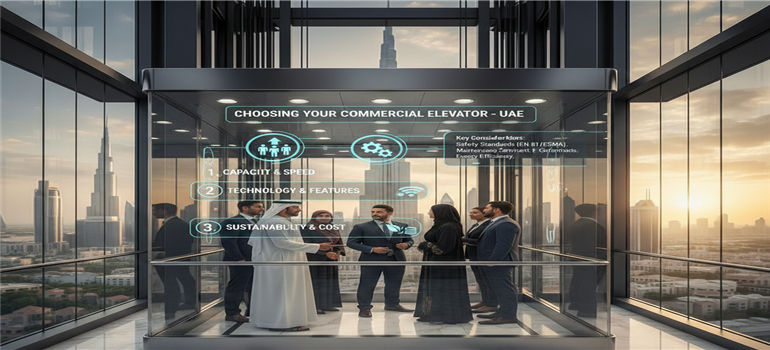
How to Choose the Best Commercial Elevator in UAE
(What to Evaluate: Size, Capacity, Safety, Drive System, and Cost)
Choosing the right commercial elevator is a critical decision for any building owner, developer, or facility manager in the UAE. Whether for offices, shopping malls, hospitals, hotels, or residential towers, the right elevator ensures smooth movement, safety, and long-term value.
With rapid construction growth in Dubai, Abu Dhabi, Sharjah, and Ajman, demand for reliable elevator systems is higher than ever. This guide explains the key factors to consider when selecting the best commercial elevator in the UAE.
1. Evaluate the Building Size and Height
Before selecting an elevator, analyze your building’s structure and usage.
Consider:
-
Total number of floors
-
Basement levels
-
Floor-to-floor height
-
Building traffic flow
For high-rise buildings, high-speed elevators are essential. Low-rise commercial buildings may require standard-speed systems.
A professional elevator contractor can conduct a site assessment to recommend the most suitable system.
2. Determine the Right Load Capacity
Load capacity is one of the most important factors in commercial elevator selection.
Common capacities include:
-
450 kg – 600 kg (small offices, clinics)
-
800 kg – 1000 kg (medium commercial buildings)
-
1200 kg – 1600 kg (malls, hospitals, hotels)
-
Above 2000 kg (industrial or freight lifts)
Choosing insufficient capacity leads to overcrowding, faster wear, and higher maintenance costs.
Always match capacity with building occupancy and peak usage hours.
3. Prioritize Safety Standards and Compliance
Safety is mandatory in UAE commercial buildings. Your elevator must comply with local regulations and international standards.
Key safety features to look for:
-
Emergency braking system
-
Automatic rescue device (ARD)
-
Overload sensors
-
Door safety edges and light curtains
-
Fire emergency operation
-
Intercom and alarm system
-
Power backup integration
Ensure your supplier follows Dubai Municipality, Abu Dhabi authorities, and UAE civil defense safety guidelines.
4. Choose the Right Drive System
The drive system determines elevator performance, energy efficiency, and maintenance requirements.
Traction Elevators
Best for medium to high-rise buildings.
Advantages:
-
High speed
-
Energy-efficient
-
Smooth ride
-
Suitable for heavy traffic
Machine Room-Less (MRL) Elevators
Ideal for modern commercial buildings with limited space.
Advantages:
-
Saves machine room space
-
Lower construction cost
-
Environment-friendly design
Hydraulic Elevators
Mostly used for low-rise buildings.
Advantages:
-
Lower installation cost
-
Suitable for small commercial properties
-
Simple design
Consult an experienced elevator manufacturer to select the best drive system for your project.
5. Analyze Traffic Flow and Usage Pattern
Traffic analysis helps determine how many elevators your building needs.
Evaluate:
-
Number of daily users
-
Peak hours (morning, lunch, evening)
-
Visitor frequency
-
Goods movement
-
Special requirements (wheelchair access, hospital beds)
Poor traffic planning leads to long waiting times and user dissatisfaction.
Professional elevator companies conduct traffic studies for large projects.
6. Consider Energy Efficiency and Sustainability
With rising energy costs and sustainability goals in the UAE, energy-efficient elevators are becoming essential.
Look for:
-
VVVF drives
-
Regenerative systems
-
LED cabin lighting
-
Sleep mode operation
-
Low-power control systems
These features reduce electricity consumption and operational expenses.
7. Evaluate Total Cost and Budget
When choosing a commercial elevator, consider total ownership cost, not just installation price.
Cost factors include:
-
Equipment price
-
Installation charges
-
Civil work modifications
-
Annual maintenance contract (AMC)
-
Spare parts cost
-
Modernization expenses
Low-cost systems may result in frequent breakdowns and high maintenance costs.
Investing in quality systems provides long-term savings.
8. Check Maintenance and After-Sales Support
Reliable maintenance ensures safety and long service life.
Before selecting a supplier, check:
-
Availability of local service team
-
Response time for breakdowns
-
Spare parts stock
-
AMC terms
-
Technical expertise
A strong service provider in Dubai, Abu Dhabi, Sharjah, and Ajman is essential for uninterrupted operations.
9. Focus on Cabin Design and User Experience
Commercial elevators also represent your building’s image.
Consider:
-
Stainless steel or glass finishes
-
Digital displays
-
Touchless buttons
-
CCTV systems
-
Ventilation and air purification
-
Noise and vibration control
A well-designed cabin improves comfort and professional appearance.
10. Work with a Trusted Elevator Company in UAE
Partnering with an experienced elevator company ensures quality installation, regulatory compliance, and reliable support.
Choose a provider with:
-
Proven UAE project experience
-
Certified technicians
-
Transparent pricing
-
Warranty coverage
-
Positive client feedback
A professional partner simplifies project management and reduces future risks.
Choosing the best commercial elevator in the UAE requires careful evaluation of building size, capacity, safety standards, drive systems, traffic flow, energy efficiency, and long-term costs.
By working with a trusted elevator manufacturer and service provider, you can ensure safe, smooth, and cost-effective vertical transportation for your commercial property.
If you are planning a new project or upgrading your existing elevators, consult a professional team for expert guidance and customized solutions.