
Elevator Doors Won't Close or Keep Reopening: Common Causes and What to Check
Elevator Doors Won't Close or Keep Reopening: Common Causes and What to Check
Of all the faults a property manager hears about, the lift door that refuses to close, or closes and immediately reopens, is among the most frequent. It looks minor, yet it can take a car out of service, strand passengers and generate repeated callouts.
This guide explains how the door system works, the usual reasons it misbehaves in UAE buildings, which observations are safe for your staff to make, and when the job belongs to a qualified lift technician.
How an Elevator Door System Works
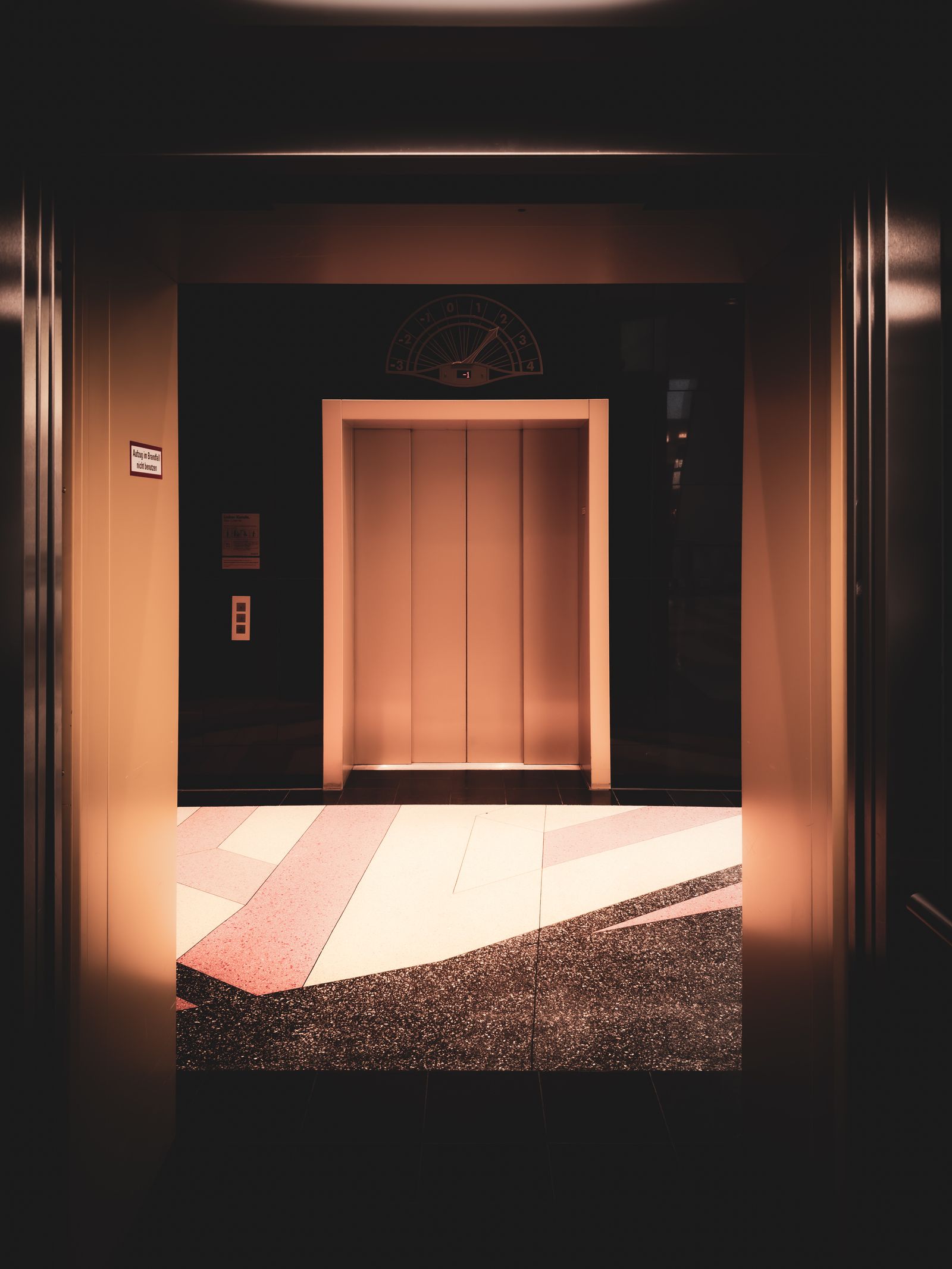
A lift has two sets of doors that move together: the car doors and the landing doors on each floor. A door operator mounted on top of the car drives the car doors, and a coupling (the vane and rollers, or "clutch") pulls the landing doors along with them.
Several devices must agree before the car is allowed to move:
- Door operator and controller – open and close the doors at a controlled speed.
- Door lock and contact circuit – prove that every landing door is closed and locked.
- Safety edge, light curtain or infrared sensors – detect a passenger or object in the doorway and reverse the doors.
- Sill and track – guide the door panels along the threshold.
If any link in that chain reports a problem, the controller will not dispatch the car. That is by design: a lift should refuse to move rather than travel with a door open.
Symptom 1: Doors Reopen Repeatedly
When the doors start to close, bump back open and repeat, the system believes something is in the way. Typical causes include:
- Dirty or blocked sensors. Dust, cleaning residue or a smudge on a light curtain or infrared sensor can read as an obstruction. UAE sand and fine dust make this especially common.
- Misaligned sensors. A knock from a trolley can shift a sensor bar slightly so that it never sees a clear beam.
- Worn or sticking safety edge. The moving edge on the leading panel may stick or trigger early.
- Debris in the sill groove. Grit, packaging or small objects add resistance, and the operator reverses when it senses the extra load.
Symptom 2: Doors Close but the Car Won't Move
If the doors look closed but the lift sits at the floor, the lock circuit is probably not completing. Common reasons:
- A landing door lock or contact that is dirty, worn or slightly out of adjustment.
- Landing door panels that have shifted so the lock does not fully engage.
- A loose wire or connector in the door circuit after repeated door cycling.
This is a safety circuit. It should never be bypassed, jumped or "helped along" by anyone other than a competent lift technician working under proper procedure.
Symptom 3: Doors Stick, Judder or Move Slowly
Uneven or noisy door travel normally points to mechanical wear rather than electronics.
- Worn door rollers or hangers let panels drop and rub against the sill or frame.
- Worn sill guides (gibs) allow the panel to wobble or jump the track.
- Belt or drive wear in the operator reduces smoothness and can cause nuisance faults.
- Inadequate lubrication or the wrong lubricant on tracks where lubrication is not specified.
- Door panel misalignment after impact, such as a loaded trolley hitting the leading edge.
These faults tend to worsen gradually. A door that sounds rougher each month is giving you early warning.
Why UAE Conditions Make Door Faults More Likely
Several local factors do not cause door problems on their own but speed up wear and nuisance faults:
- Dust and sand collect in sill grooves and on sensors, particularly in ground-floor lobbies and car parks.
- Heat and humidity affect electronics, lubricants and rubber or plastic parts, especially where machine room or hoistway temperatures are not well controlled.
- High traffic in malls, hotels, hospitals and towers means doors cycle thousands of times a day, so wear accumulates quickly.
- Heavy goods movement through passenger lifts in hotels, residential towers and offices causes door-edge impacts.
What Building Staff Can Safely Check
Staff are not expected to repair a lift, but some observations make the technician's work faster and cheaper:
- Note the pattern. Record which lift, which floor, what time and what the doors did. Faults confined to one floor suggest a landing door problem; faults on every floor suggest the car door or operator.
- Look at the threshold from outside the car for visible debris, and remove loose rubbish only if it can be done without reaching into the hoistway or sill gap.
- Check the sensor area for obvious dirt or an object obstructing it, such as a sticker, tape or protective film left by a contractor.
- Listen for grinding, scraping or clicking, and note whether the noise happens when opening, closing, or both.
- Report error codes shown on the car or landing display if the controller provides them.
Do not force the doors, prise open landing doors, use tools in the sill, or attempt to reset safety circuits. Landing doors can be opened from outside with a special key only by trained persons, and a car that is not at the landing may leave an open shaft behind the door.
When to Call a Technician
Arrange a service visit promptly if you see any of the following:
- Doors that open or close partially, or stop mid-travel.
- A car that stops moving between floors with the doors closed.
- Door panels that visibly drop, rub, or sit unevenly.
- Repeated faults on the same lift despite cleaning.
- Any situation where passengers are trapped. Call your 24/7 service line immediately and keep passengers calm; do not attempt a rescue yourself.
Door-related faults are well understood by experienced technicians, and most are resolved by cleaning, adjustment or replacing a worn component. The cost of ignoring them is repeat entrapments, tenant complaints, and consequential damage to the operator.
Preventing Door Faults Through Maintenance
Because doors are the most operated component in the system, they reward routine attention. A sensible preventive plan covers:
- Cleaning and inspecting sills and door tracks at every service visit.
- Checking rollers, hangers, gibs and door-lock contacts for wear and adjusting before they fail.
- Testing the safety edge or light curtain and confirming the doors reverse correctly.
- Inspecting the door operator, drive belt and coupling.
- Reviewing fault logs from the controller to spot repeating door trips.
A structured maintenance contract makes this routine instead of reactive. Our guide to elevator maintenance in the UAE explains what a thorough programme should include. If your doors are repeatedly failing on equipment that is decades old, it may also be worth asking whether the door system or controller is due for lift modernization, since replacement operators and controls can restore reliability where repeated repairs no longer do.
You can see the full range of what we offer on our services page.
Questions to Ask Your Lift Contractor
- Are door components inspected and adjusted at each visit, or only when they fail?
- Do you record door-related callouts so recurring issues are identified?
- What is the response arrangement for entrapments outside working hours?
- If a door operator is obsolete, what are the options?
Talk to Morris Elevators
If your lifts have door problems that keep coming back, Morris Elevators can inspect the system, identify the root cause and recommend repair, maintenance or modernization options for your building in Abu Dhabi, Dubai and across the UAE.
Call us on +971 2 555 2727, email [email protected], or visit us at Mazyad Mall, MBZ City, Abu Dhabi.